Pull Ups For Beginners - Everything You Should Know
Fitness Coach
By
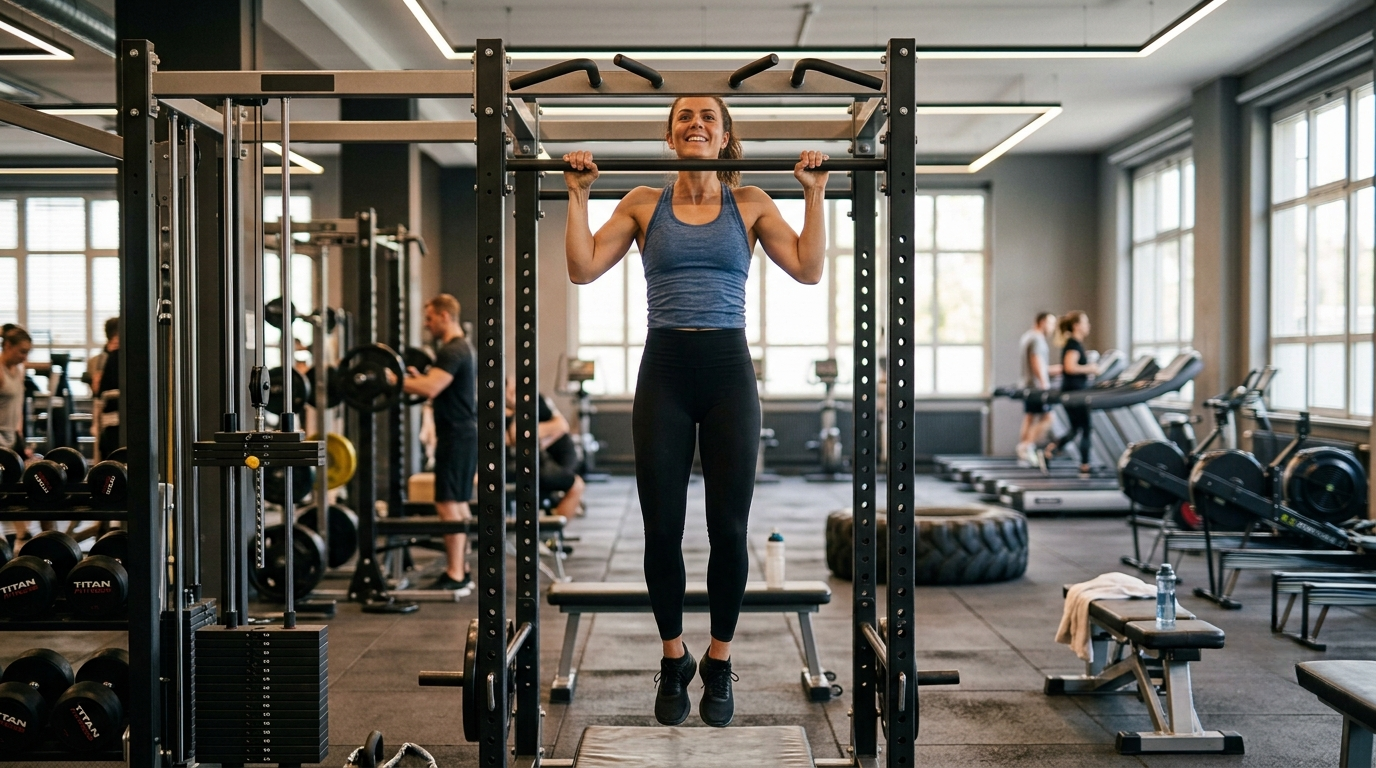
A pull-up exercise is a powerful upper-body workout in which you hang from a bar with your palms facing away and lift yourself until your chin clears the bar.
Pull-up exercise is a challenging exercise but strengthens your back, arms, and shoulders. Pull-up bar exercises also increase grip strength and improve posture.
Time Needed to Get Your First Pull-Up?
How to train to do a pull-up is the question every fitness enthusiast wants to know the answer to. Pull-up exercise is a high-end exercise, so the timeline to get your first pull-up varies depending on many factors mentioned below:
- If you are a complete beginner, it might take 8-12+ days to get your first pull-up bar exercises.
- If you already hang from pull-up bars or do rows, it might take 6-8 weeks to get your first pull-up.
- It might take 4-6 weeks if you are already doing assisted pull-up exercises.
- You might take 1-4 weeks if you can do half pull-ups.
But these are hard-and-fast rules; it might take more or less time than the ones mentioned above. Many other factors, such as body weight, grip strength, back, and lat strength, are involved. It entirely depends on you and how quickly you can adapt to pull-up bar exercises. Again, you have to be very consistent in your workout routine.
How to Do a Pull-Up
A Pull-Up exercise needs a lot of dedication and consistency. But it also requires a few tricks to do the Pull-Up properly.
Shoulder Setting:
- Start with a pull movement: pull your shoulders down first, then back to the original position.
- Rise with the help of your arms and back, and bring your chest to the rod.
Elbows down:
- Many believe that to do the pull-up exercise, you will have to raise your chin to the bar. But think of it as elbows down towards your ribs and not chin up.
- The chin-up rod makes the pull-up even more difficult.
Tighten your Core:
- A loose core makes your body swing, which wastes your energy.
- To tighten the core, think of someone poking your stomach or about to. Make sure your legs are brought forward. In this way, you keep your body light and stable.
Hollow Body Shape:
- Straighten your legs and place them slightly forward, and place your ribs down.
- This posture gives a perfect pull-up posture. Imagine you are forming the shape of a banana.
Strong Grip:
- Make sure you have a firm grip on the bar. The stronger the grip on the bar, the stronger the pull.
- Squeeze the bar with your hands as hard as you can.
Pull from the bottom:
- From the start, it exudes a strong, confident pull.
- Think of it as a stormy pull and perform it.
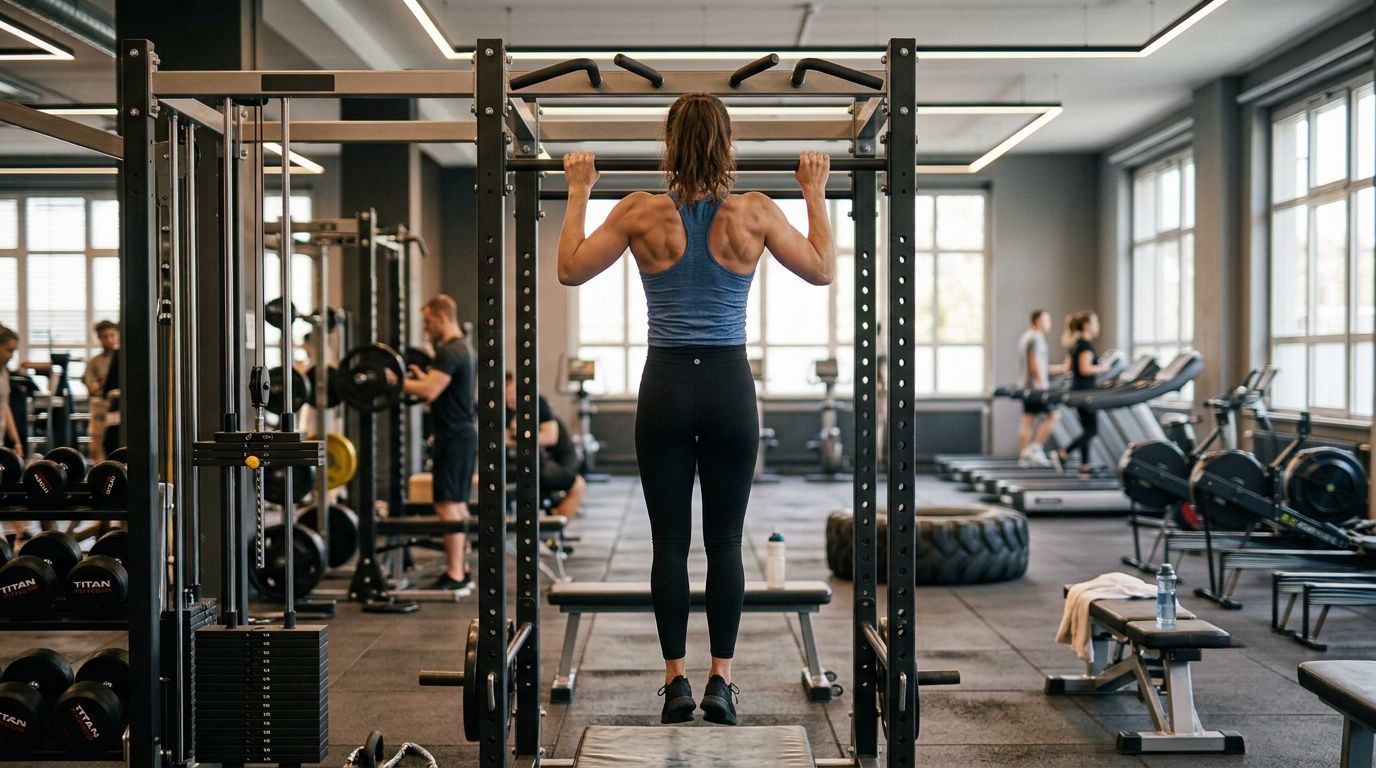
How to Do a Pull-Up
How to do Pull-Ups for Beginners
How to work up to a pull-up is a more important question for beginners than the pull-up itself. A beginner might take some time to get used to the pull-up exercises. It depends on the person trying. Along with good nutrition and proper dedication, a beginner should do the following exercises:
Dead Hangs:
- Start dead hangs. Hang from the bars with an overhead grip and practice firm grip with this, and hang like that for as long as you can. Engage your core.
Active Hangs:
- Next practice active hangs. Start with dead hangs, then pull your shoulder blades down and back to the original form.
Inverted Rows:
- Fix a row at a height where you can have space for rows. Next, pull up your chest to the bar. Adjust the angle so you feel a bit more comfortable.
Negative Pulls:
- Jump up to reach the bar and make sure your chin clears it. Then slowly work on the descending process. Release yourself as slowly as possible.
Lat Pulls:
- Exercises like lat pull-downs or other row variations can be a great help in building back and arm strength.
Train Consistently: You will have to try to do the pull-up exercise at least two or three times a week. Maintain consistency throughout the process. Difficult things need dedication and consistency to crack.
Step-by-Step Guide to Doing a Pull-Up
Pull-up exercise requires a lot of dedication and consistency. To do a proper pull-up, keep the following pointers in mind while practising.
Grip:
- Grab the rod with both your hands, slightly wider than your shoulders. Tighten your grip on the rod. There is no compromise in that case.
Tip: Your palms should face away from your face.
Shoulder Engagement:
- In the starting position, your shoulder blades should be open upwards. Engage your core and glutes. Get ready for the pull-ups.
Tip: Do not make any sudden movements or jerks while your hands are up.
Pull Up:
- Start your movement by pulling your shoulder blades down and lifting your chest. The chin should be above the bar as you move upwards.
Tip: Use your back and arms to pull up.
Descend:
- Now, as you move down, be very careful and slowly return to the starting position.
Tip: Do not lock out your elbows completely.
The most important part here is to engage your core and glutes tightly and not allow your body to swing or make movements.
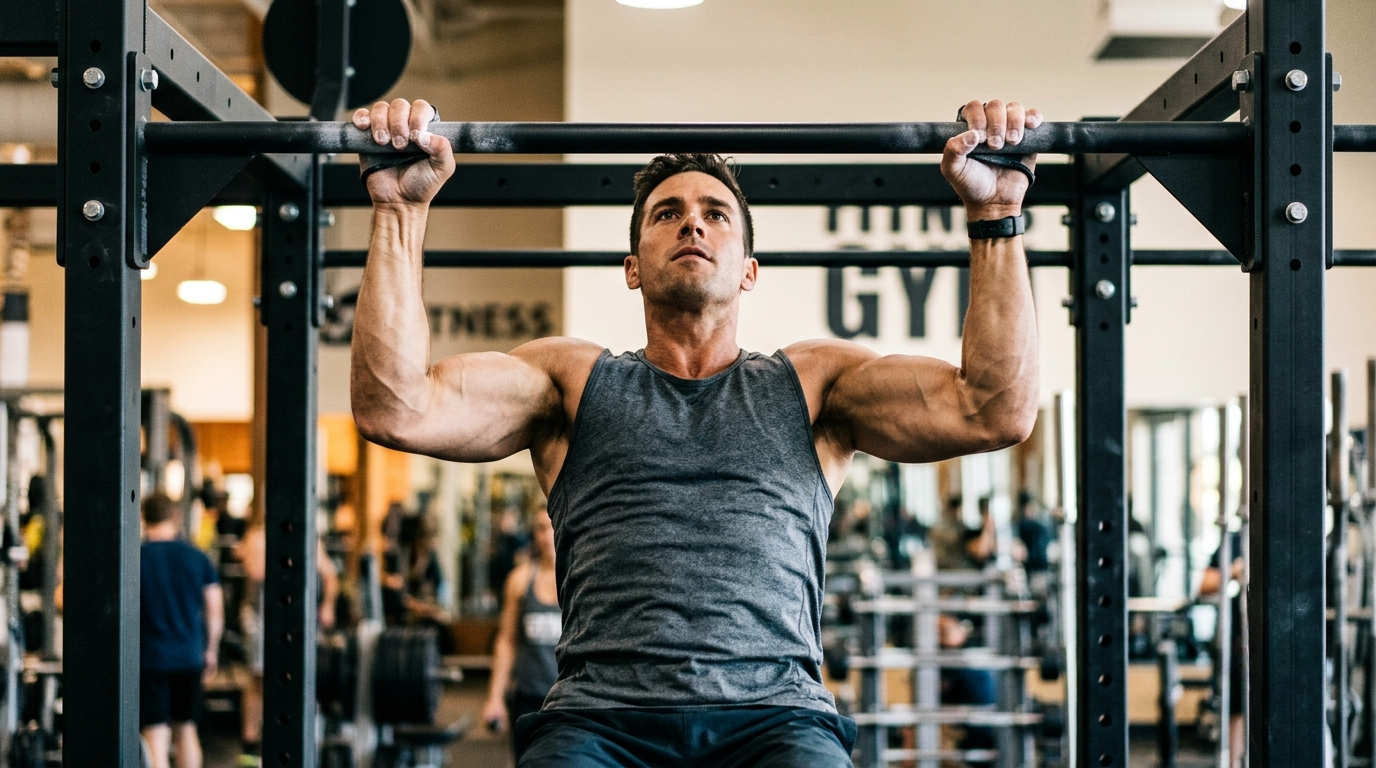
Grip while pull up
Reps and Sets for the First Pull-up
To make a perfect pull-up, you have to strengthen your back, grip, core, and shoulders. To do that, you have to perform a few exercises regularly. They are:
Dead Hangs:
- Dead hangs improve your grip strength and need regular practice.
- Start with 3-4 sets of 20-30 seconds each. If not possible, start with 10-15 seconds and gradually increase the time.
Scapular Pull-Ups:
- Scalar Pull-Ups help you with pull-ups, serving as the foundation of your pull-up exercise.
- Start by doing 3-4 sets of Scapular Pull-Ups of 8-12 reps. Try your best to complete it, as it will teach you proper shoulder engagement.
Negative Pull-Ups:
- Negative Pull-Ups help you to know the lowering movement. It is essential for the pull-up exercise. They allow you to build the much-needed extra strength.
- Start with 3-5 sets of 3-5 slow reps per set. Keep a goal that each pull lasts for 3-5 seconds.
Assisted Pull-Ups:
- Try doing the assisted pull-ups with a band or machine. Make sure you perform it using the least assistance, so it gives you extra strength.
- Start by doing 3-4 sets of 6-10 controlled reps each.
Rows:
- Rows help you strengthen your lats, upper back, and arms.
- Try inverted rows with 3-4 sets and 8-12 reps in each of the sets, and dumbbell rows with the exact count.
As you start performing the exercises, you gradually build strength, and then you can attempt the pull-ups. You may not get the complete thing, but day by day, you can make progress.
You don't have to overpush yourself, but keep trying; you will reach your destination soon. Consistency is the key to solving every difficulty. It will take time for beginners, but you will get there gradually.
